
With Impact Comes Responsibility: Reflections from CREATE

As we hosted CREATE’s final Young Persons’ Advisory Group (YPAG) meeting last month, we found ourselves sitting with more than just a sense of completion. The final meeting felt like a mirror of the project as a whole. It was careful, emotional, and deeply human.
This piece brings together our reflections, drawn from conversations between us as Project Manager and Research Fellow, on how CREATE shaped our practice and expectations. We write about endings, boundaries, consideration, and co-intentionality not as abstract ideas, but as things we had to negotiate, question, and learn through experience.
Project Manager - Danelle Lee
Research Fellow - Crissie Harney
The last YPAG session stayed with us both. Not because of one single moment, but because of how clearly the young people spoke about what the project had meant to them.


One young person talked about how overwhelming the beginning had felt. She described how quiet she had been, unsure whether her voice really belonged in the space at all. Over time, through being asked questions and being genuinely listened to, something shifted. By the end of the project, she spoke with confidence about her ideas and her place in the group.
Another young person spoke about poetry. It was not something they had never been interested in before and, in fact, it was something they had actively disliked. Through the YPAG and the Not So Alone campaign, they experimented anyway. By the end of CREATE, their work had been published online.
Hearing these reflections reminded us that participation does not simply stop when a project ends. Confidence, creativity, and relationships linger. Once we really paid attention to that, it changed how we thought about endings.
Over the course of CREATE, we kept coming back to the idea that every engagement leaves something behind. Skills gained, confidence built, relationships formed, these things stay with people in different ways.
Hooks - Emotional, relational, and creative connections that remind us that having an impact brings responsibility.
We started thinking about closure much earlier than we had on previous projects. Rather than assuming what the young people might need at the end, we asked them directly what coming to the end of CREATE would feel like for them, and what would be useful or supportive.
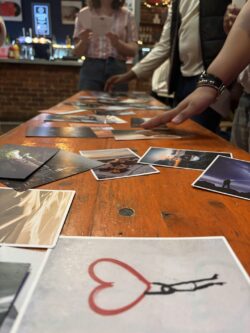 Planning for closure became part of our duty of care. If you create spaces where people feel held, heard, or able to try something new for the first time, then how you end matters just as much as how you begin.
Throughout the project, we were clear that care does not mean becoming everything to everyone. We had clear safeguarding practices and knew that holding professional boundaries was part of our responsibility. Those boundaries were not about distance. They were about clarity. Young people knew who was responsible in the room, what we could offer, and what we could not. That clarity meant they did not have to guess or navigate blurred roles, which in turn made the space feel safer.
Holding boundaries well took training, reflection, and ongoing conversation within the team. It protected participants and it protected us. Rather than limiting care, it made it more dependable. It allowed us to offer support that was consistent, contained, and honest.
Looking after ourselves was not something separate from the work. It was part of it.
Because CREATE focused on mental health, we were explicit that the same care had to extend to the team. Looking after ourselves was not something separate from the work. It was part of it.
When values such as care, curiosity, and respect were lived within the team, they shaped how we worked with young people without needing to be stated repeatedly.
Embedding this ethos across the project changed how the work felt day to day. When values such as care, curiosity, and respect were lived within the team, they shaped how we worked with young people without needing to be stated repeatedly.
We often talked about this as an ecology. A way of working shaped by relationships, not driven solely by outputs or deliverables.
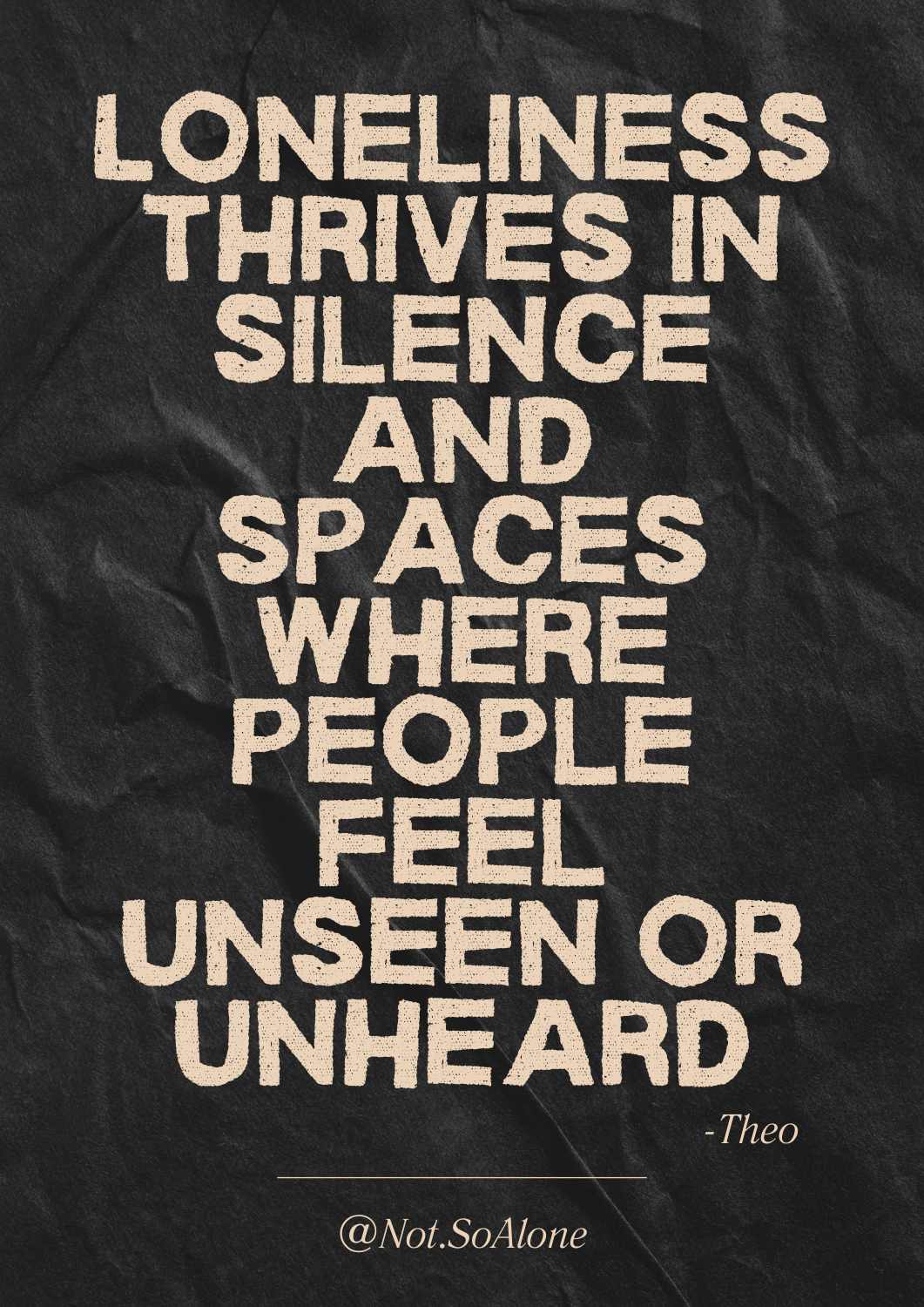
Not So Alone post by YPAG member Theo
We were always realistic about what CREATE could and could not be. We could not change the wider systems young people were moving through, or the ways their voices were often dismissed elsewhere.
What we could do was offer a temporary space where they were listened to, respected, and encouraged to explore without fear of getting it wrong. Sometimes that space existed for an hour. Sometimes it lasted a full day. Even when brief, it mattered.
Offering that kind of haven did not solve everything, but it showed that another way of being was possible. One where nuance, uncertainty, and learning were allowed.
What supports autonomy here? What creates agency? What is enough?
Over time, we found ourselves talking less about co-production as a set of tasks and more about co-intentionality as a shared way of working. Rather than focusing on who was doing what, we paid more attention to why we were each doing it and what values we were holding in place. This shift helped relieve the pressure to do everything for everyone. Instead, we asked simpler questions. What supports autonomy here? What creates agency? What is enough?
Being inclusive did not mean endlessly adding more. It meant making thoughtful choices about what genuinely opened up participation, without overwhelming capacity or diluting responsibility.
Working across disciplines pushed us to think more carefully about how we communicate.
We became more aware of how easily language that feels normal in one space can become exclusionary in another. Experiences outside CREATE, including conferences where jargon created distance rather than understanding, reinforced this. Moments where someone paused to ask for clarity were reminders that accessibility is not about simplifying ideas. It is about making space for others to engage. Within CREATE, we tried to treat understanding as a shared responsibility. If something was not landing, it was an invitation to rephrase, not to retreat behind expertise.
When we reflect on what we have learned through CREATE, it does not land as a neat list or a finished framework. These are not practices we feel we have mastered, but ways of working we now pay attention to.
Values, for us, cannot sit quietly on a page. They have to show up in everyday practice, especially when things feel complex or uncertain.
We plan endings earlier. We notice the emotional and relational traces participation leaves behind. We hold boundaries with more confidence. We are more thoughtful about what inclusion actually requires, and more wary of inclusion that looks good on paper but lacks depth in practice.
Most of all, we have learned to slow down and ask whether what we are doing genuinely supports autonomy and agency, rather than simply appearing participatory.
As we enter the final phase of CREATE, clarifying and analysing research, writing and rewriting papers and sharing the lesson's learned, these reflections will stay with us. This project has shaped the kind of work we want to do and the environments we want to help create.
Values, for us, cannot sit quietly on a page. They have to show up in everyday practice, especially when things feel complex or uncertain.
Ending well is not about tying everything up neatly. It is about leaving people feeling respected and supported, and able to carry something forward themselves. That is what we continue to aim for.
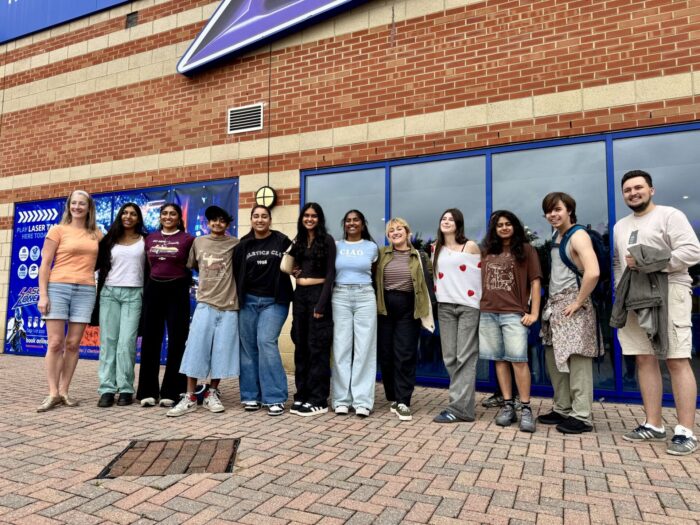
Group photo after laser tag team connection activity