
Why I believe in the power of the arts to support youth mental health
We caught up with Siobhan Hugh-Jones, Professor of Mental Health Psychology, to hear about her research with Project CREATE. She shares insights on why the arts matter so much to young people’s wellbeing, and what she has learned from collaborating closely with young people and artists.
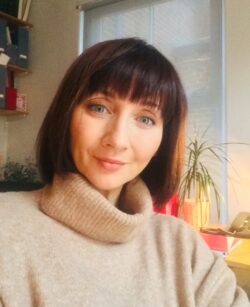
Professor Siobhan Hugh-Jones, Project CREATE Co-Investigator
How would you explain your research?
When a young person engages with arts-based practices in a community group, like learning how to paint, being in a musical group, a photography course, arts and crafts groups etc., they tend to enjoy them and find them good for their wellbeing. However, researchers are still building up a strong evidence base to show how good the arts are for youth wellbeing so that more young get access to them. Project CREATE is contributing to this by working closely with young people and artists themselves.
What drew you to this area of research?
I was drawn to this are of research because of the need to find different ways to support adolescent wellbeing that are not clinical, which do not place demands on already stretched services and which normalise rather than pathologise how hard it can be to grow up in current youth, educational and political culture.
I've been very surprised at how quickly engaging in an arts-based practice can be therapeutic, and not just at a physiological level, but at the level of self, self-awareness, self-acceptance and 'being with' self.
What has surprised you most in doing research related to Project CREATE?
I have been surprised by a lot. The enthusiasm, dedication and thoughtfulness of young people in the project has meant that we have understood in significant detail how arts-based programmes support their well-being.
I was surprised at how they felt art in school or colleges could be stripped of its wellbeing benefits as it comes with expectations, judgement, a focus on output rather than process and often diminishes the fun, creativity and connection that comes with doing art with, or in the company of peers.
I've also been very surprised at how quickly engaging in an arts-based practice can be therapeutic, and not just at a physiological level, but at the level of self, self-awareness, self-acceptance and 'being with' self.
From your perspective, what is the most important aspect of the project’s research?
The most important aspect for me is the bringing together of young people, artists and interdisciplinary researchers. This, I believe, has led to a explosion of ideas, new ways of seeing, understanding and talking about arts as therapeutic and which keeps the lived experience of young people as the centrepin of our knowledge.
What would you like other researchers in this field (and beyond) to learn from this project?
I would like other researchers to be able to benefit from the ways we are mapping the possible therapeutic experiences and pathways through community arts programmes for adolescents. They might find it helpful to structure their programmes and evaluations, to contribute further to the evolving evidence base about how arts could be a strong alternative to clinical responses to youth mental health needs.
For some, good mental health means experiencing connection with others, based on shared interests and a desire to be part of community, to feel rooted.
Why do you think arts-based approaches are valuable in mental health research?
Because mental health and wellbeing is more than just 'fixing our minds' to think in more rational, positive ways. It is more than managing our emotions and relationships well. Those are features of mental health that are prioritised by many dominant models of mental health and, of course, have their place.
But young people tell us that good mental health means having spaces to be fully themselves, to experience creativity and expression away from judgement or pressure, to have time and space to experience calm, flow and deep self-knowledge and acceptance.
For some, good mental health means experiencing connection with others, based on shared interests and a desire to be part of community, to feel rooted. The arts offer potential for profound experiences across these and many other dimensions of what it means to 'feel well'.
How can arts practices help young people express themselves and navigate their mental health?
We have been learning that there are many, many processes that could potentially be at work for a young person engaged in arts. These processes appear to differ by which kind of arts practice is engaged with, but also by the expectations and needs of the young person.
But broadly speaking, community arts programmes appear to help young people by being a space where the normal rules of everyday life don't apply - there is no expectation, no judgement and no competition.
Instead, these get replaced by welcoming difference and people's unique way of expressing creativity. They break down rules about pace and productivity, being replaced instead with a focus on the process, the experience and being with the art practice.
Through the arts practice, young people tell us they experience all sorts of helpful things - from greater self-awareness, to feeling legitimised as a creative person and to feeling a new sense being in oneself that feels genuine, calm and safe.