
When young people are part of the work, not just the story
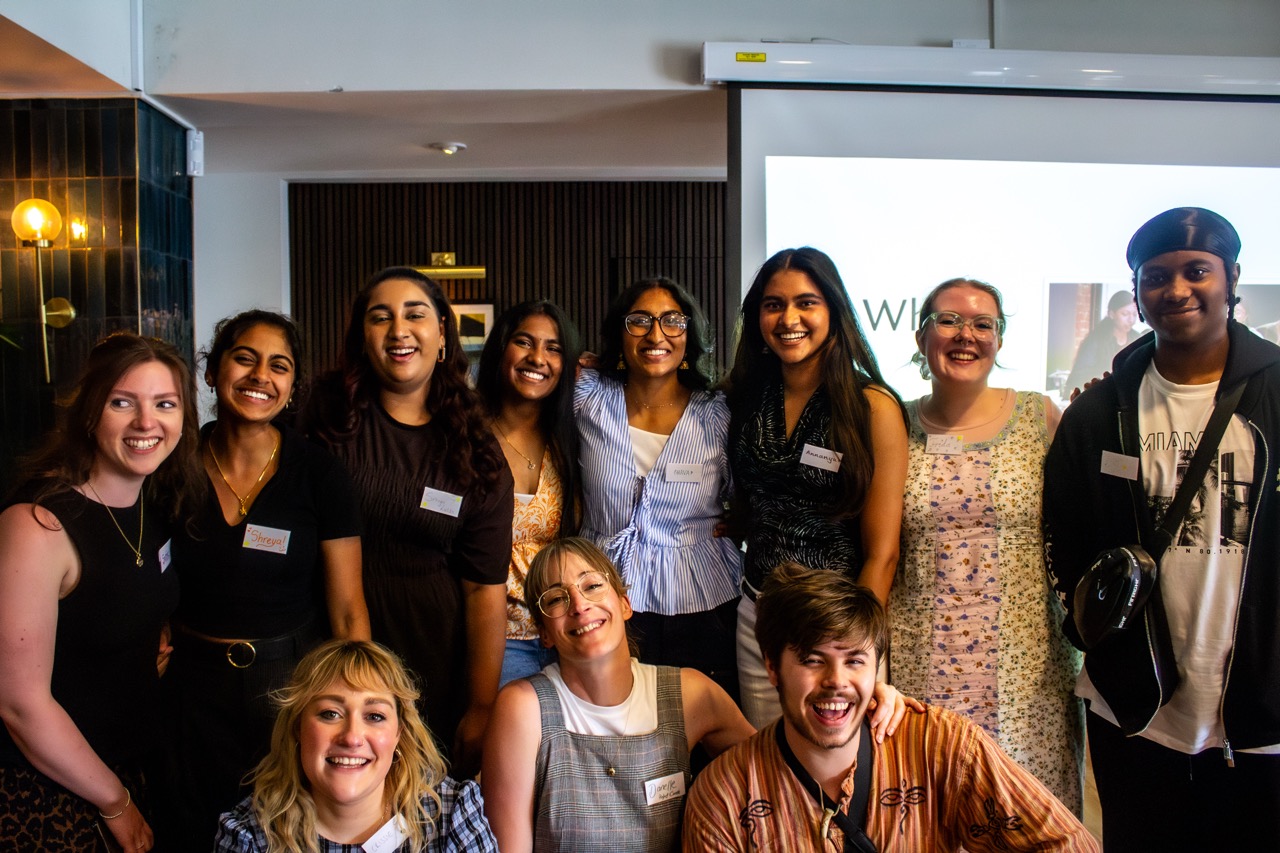
At CREATE, we’ve spent the last few years working alongside young people through the Young Persons’ Advisory Group. Not as an add on, and not at the end, but as part of the work from the start.
As the project has come to a close, we asked some of the young people involved to reflect on their experiences, and on the CREATE conference that brought everything together. What follows isn’t a summary. It’s a way of staying close to what they’ve said, and noticing what their reflections tell us about what youth voice really means in practice, both for the people involved and for the research itself.
A week after the CREATE conference, the day was still sitting with people.
I still find myself thinking about the day and, more importantly, everything that led up to it.
That feeling comes up more than once. Not just the event itself, but the build up. The conversations, the Living Labs, the moments that didn’t necessarily feel significant at the time.
For many of the young people, the starting point was quite ordinary.
If I’m honest, when I first joined CREATE, I had almost zero expectations of what the project was going to be.

Frida writes about joining at a point in her life where she was looking for “something to do and somewhere to belong”, even saying that if nothing else, she would “at least get some money.”
And yet, over time, something shifted.
CREATE became more than a project. It became a space where young people were trusted, listened to, challenged, and encouraged to contribute in meaningful ways.
That sense of space comes through strongly across all their reflections. Roan describes the project as somewhere that sat between academia and lived experience, where it was possible to feel “at home” rather than out of place. Bhava reflects that “everything felt like an invitation rather than an expectation”, which meant people could take part in ways that suited them.
That distinction matters. It changes how people show up, and what they feel able to do once they are there.
What stands out is not just that young people were present, but how much they were trusted with.
As young people, we were involved in it all… from what juice to put out in the morning to what delegates to invite.

They helped plan the day, designed elements, facilitated sessions, and spoke about the work as people who had shaped it. Sophie reflects that the conference “didn’t just talk about co production, it showed it in action”, through workshops and activities that people could actually take part in. Roan talks about carrying out a full access audit of the space, describing it as “another moment of feeling listened to… using my skills to benefit the whole.”
Across the reflections, there are small moments where you can see things landing. Standing in front of a room and speaking. Seeing people engage with what you’ve said. Realising that your experience is not just being heard, but taken seriously.
My standout moment was standing at the front of the room… answering questions about our experiences… It felt like proof that co production… genuinely works.
Srhya describes looking around the room and noticing something slightly different.
“I could see people listening. I could see people asking questions. I could see people reflecting on what had been shared.”
“It felt as though the work we’d contributed was being taken seriously.”
For some, that seems to be the shift.
There is a lot of pride in these reflections, but also something quieter. Frida writes about leaving with “new friendships, connections and networks, a passion for research… academic and social confidence… a feeling of belonging and a rekindled artistic spark.” Sophie talks about feeling “incredibly proud” and realising more clearly the kinds of work she wants to pursue.
And there are moments where it becomes very direct.
I felt like an expert, like my voice matters greatly.
Those kinds of statements are simple, but they carry weight. They come from experience, not just being told something.
Running alongside all of this is something less directly stated, but just as important. What the research becomes because of these relationships.
The day showcased how research, the arts and young people can come together to create something meaningful.
It wasn’t just presentations. It was interactive, participatory, built in a way that reflected the project rather than sitting outside it. You can see it in the attention to access, in the way ideas were explained, and in how the day sat somewhere between academic discussion and lived experience.
Roan describes that blend of “professional” and “personal” as “key to the success of the conference.” Bhava reflects that what they hoped to show was “what is possible when young people, researchers and arts scientists work together as partners.”
 Not contributors. Partners.
There is also a strong sense that what was built goes beyond outputs.
Roan writes that CREATE “formed something more than just a dataset, it built a community.” Bhava talks about the atmosphere as feeling like a family, shaped by “a strong sense of support, teamwork, and community.”
And that feeling shows up in the conference itself.
A final moment that stuck with me is standing… with all the other young people… and feeling like this project belongs to us.
There is a clear thread running through all of these reflections. Not just that young people benefit from being involved in research, although they do, but that the work itself is different because of it.
More open. More grounded. More connected to the lives it is trying to understand.
More than anything, the conference left me feeling hopeful.
Hopeful that these ways of working continue.
Because, as Srhya puts it, “this shouldn’t be the exception.”
At CREATE, that feels like one of the most important things to hold onto. These reflections don’t just capture what happened. They point towards what could happen more often, if relationships like these are built, supported, and taken seriously over time.
And as Srhya reminds us, “they don’t just add to the conversation, they help transform it.”
Please continue reading to read each of their reflections.
Srhya Lahl
 One week on from the CREATE Conference, I still find myself thinking about the day and, more importantly, everything that led up to it.
Frida Margrethe Aalborg
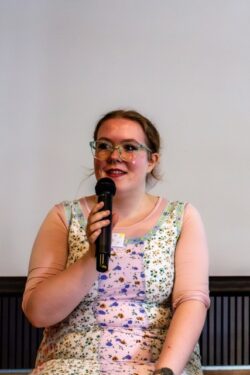
Your eldest granddaughter has had a wonderful time in Leeds, I have organised and delivered my first conference, hopefully there will be more in the future.
This is what I wrote on a postcard to my grandfather in a cafe in Leeds on the 29th of May 2026. I was exhausted and a little sad, but so inspired and happy at the same time. My journey with CREATE had started two years prior, I was in my second year of an applied theatre degree and had just gone through a really awful break-up. I was looking for something to do and somewhere to belong, and when the opportunity to participate in arts based research with other young people with free travel and some money as part of the deal came up, I joined hoping to experience something new, and if not, to at least get some money. I did not expect what I would find in the project. New friendships, connections and networks, a passion for research with young people, academic and social confidence, a feeling of belonging and a rekindled artistic spark are all things I found through participating in the Living Labs and YPAG of CREATE.
The project has impacted my life in so many wonderful ways, so when it was coming to an end and the talk of a dissemination conference began, I knew I had to take part to showcase my experiences within and appreciation for CREATE. These, as well as showing the value and importance of youth participation in research were my aims going into the conference. The planning stages were a lot, big plans and many ideas and factors to remember and decisions from what juice to put out in the morning to what delegates to invite. As young people, we were involved in it all. As was one of the main foundations of CREATE, to listen to and include young people. And we were included alright.
On the day of the conference, there was so much anticipation in the air, no one quite knew how things would come together. I was reassured when I saw the banners we designed in real life. Something tactile and there. I knew how hard we had worked, how passionate the team was. I knew it would be good. And it went wonderfully. The delegates came, I said sensible things on the panel talk, I shared my experiences, and I even talked about how the project has shaped my own practice as an applied theatre masters student. What has stuck with me the most is how themselves everyone managed to be, and how the conference felt like it belonged within the world of CREATE. As we had been throughout the project we did not have to pretend or be someone else.
Participation, art and young people were at the centre of the day. And I really feel that the delegates got what we were trying to say. A final moment that stuck with me is standing in front of the audience with all the other young people during the ending remarks and feeling like this project belongs to us. I felt like an expert, like my voice matters greatly. I felt, and still feeel that I would like to organize more conferences, do more research and gain even more understanding on participatory arts research. First through my masters and then perhaps further. No matter where I end up going I know that CREATE has impacted me greatly and I will keep the project and conference with me always.
Roan Beckner
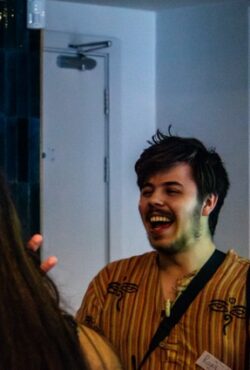 Hello, I’m Roan, and I’ve been a young person advisory group (YPAG) member for about a year and half. Having the opportunity to work on CREATE in full was really special. I wanted our dissemination conference to be a culmination of both the data we collected but also the experiences, skills, and friendships we gained! I think this carefully curated blend of ‘professional’ interests and more social/ personal outcomes was key to the success of the conference. I wanted the guests to be in a space between academia and lived experience, reflective of what CREATE has always been. Having so much influence as young people really brought that feeling to the forefront, dissuading the idea that conferences are only for academics. Despite the at times complicated material, I always felt like I understood what was going on, and that I was being understood by our guests. In other words I felt at home while at the conference.
Like many of the young people, I had never really experienced a conference, much less helped run one. Thus CREATE in full served as a massive learning experience. Even on the day we were always learning, from logistical things like effective setup and admin, to more academic matters when explaining our processes or reasoning to a room full of working professionals. This on the job learning is exactly what I had hoped to get out of it, and I think really reflects what the entire CREATE project has always been about.
An additional aim that I brought up quite early was to ensure accessibility to the conference and the space. While I have worked with access on a smaller scale before, I had the fantastic opportunity to run a full access audit for our spaces about a month prior to the conference. This experience was another moment of feeling listened to, as a collaborator and co-researcher across this conference and project as a whole. It was moments like this that made me feel that I could bring something additional to the project, using my skills to benefit the whole. This was a strength of our group, forming into mutually beneficial clusters, streamlining workflow in an oddly holistic manner. As with everything in CREATE, care took hold in logistics and preparation.
Finally, a massive thing that I saw across the project was the need for strong, yet caring leadership. While for the YPAG this was overwhelmingly Danelle and Crissie, various practitioners and academics would at times take the lead. No matter who was ‘in charge’ it always felt like a conversation. This has massively inspired me to think about how this form of pastoral, yet decisive leadership can take form. I’m not sure exactly what the answer is yet, all I know is that CREATE formed something more than just a dataset, it built a community.
Bhava Raja

More than anything, I hoped the conference would show people what is possible when young people, researchers and arts scientists work together as partners. I wanted others to see that meaningful research can grow through creativity, trust and genuine collaboration, not just traditional research methods.
I also hoped the conference would explain how our group worked and why it was so successful. From the beginning, everything felt like an invitation rather than an expectation, and we were encouraged to take part in ways that felt comfortable and enjoyable for us. That made the project feel supportive and truly collaborative.
I really wanted the conference to highlight the experience of the YPAG members and inspire others to involve young people in research in a meaningful way. I wanted people to see that when young people are listened to and valued, they can make a real impact and help create stronger projects.
Seeing so many YPAG members attend the conference and witness the impact of our work meant a lot to me. Watching our ideas and experiences being shared made me feel incredibly proud and grateful to have been part of such a special project. By the end of the conference, I felt it had achieved everything I had hoped for. It celebrated not only the project itself, but also the people behind it, and it made me even prouder to know we had helped shape both the project and the conference.
One of the most memorable moments was helping to set up at the beginning of the conference. There was a real sense of excitement and anticipation in the room, and the energy from everyone involved was incredible. Knowing that so many people were looking forward to the event made the experience even more special, especially because I was sharing it with the YPAG members.
Although many of us felt nervous, the strong sense of support, teamwork, and community helped us through. It felt like being part of a family, and that shared encouragement played a huge role in making the conference a success.
Another standout moment was speaking with people who were genuinely interested in making a positive impact on adolescent mental health and who wanted to hear about our experiences. I really enjoyed giving people a glimpse into what it was like to be part of the project and helping them understand the value of involving young people in research. It was rewarding to see how interested and engaged people were, and I felt proud to represent the work we had done together.