
Reflecting through film: Closing Project CREATE with care and creativity
This blog post is written by Danelle Lee, Project CREATE’s Project Manager, who has been inspired by working alongside our Young Persons’ Advisory Group. Danelle shares her reflections on how creativity and care can make endings in youth research meaningful and empowering.
This month, Project CREATE hosted our final in-person workshop weekend with our Young Persons’ Advisory Group (YPAG). Although we're still some months away from completing the project, we wanted to start the journey early.
This workshop was not just a creative exercise. It was an intentional and compassionate step toward closure. Using filmmaking as our medium, we invited the young people to reflect on their journey with the project, explore their experiences and shape how they wanted to remember and carry forward what they’ve gained.
Why closure matters in youth research
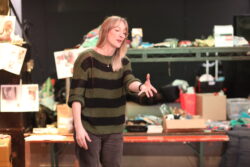
Project Manager Danelle Lee: "At Project CREATE, we’re trying to do things differently".
Too often, young people involved in research projects find themselves left behind when the work comes to an end. Closure is rarely prioritised. Instead, the focus tends to shift to outputs, funding reports and dissemination. At Project CREATE, we’re doing things a little differently.
Although the project itself still has several months to run, we wanted to begin the process of ending with care. We see this as an ethical imperative: helping young people transition from the projects intense participatory community requires time and deep consideration.
Using filmmaking to support reflection and storytelling
Filmmaking offered a unique and meaningful way to support this transition. As a creative methodology, it allowed space for emotional expression, storytelling and self-directed reflection.
In a world saturated with digital content, handing young people the tools to shape their own narratives felt both timely and empowering. Watching them storyboard, film and edit their reflections underscored just how powerful this medium can be, not just as a method, but as an experience.
I walked away from the workshop with three clear reflections of my own:
Takeaway #1: Filmmaking is an incredible tool for reflection
It creates a rich space for processing experience and emotion. It helps participants step outside the moment and look back with new insight, often uncovering meaning that traditional evaluation methods would miss.
Creating spaces for connection and creative expression should be embedded into the fabric of how we do participatory research
Takeaway #2: Resourcing this kind of work should be standard practice
We had the privilege of running a well-supported, well-resourced workshop, but it shouldn’t be a luxury. Creating spaces for connection and creative expression should be embedded into the fabric of how we do participatory research. Idealistic? Perhaps. But necessary.
Takeaway #3: 80% process, 20% product
In arts-based work, the process is where transformation happens. But we also learned that the tangible outputs – films in this case – matter deeply. They give participants something to hold, share and be proud of. The product doesn’t define the experience, but it helps commemorate it.
Implications for future co-produced youth research

Project closure with care - young people at the heart of the process.
This workshop was more than a closing event. It was a model for ethical, participatory endings in research. If we want to take co-production seriously, we need to consider every stage of the research lifecycle, including how we end well. That means creating time and space for reflection, providing creative outlets for expression, and ensuring young people feel seen and valued - not just as contributors, but as co-researchers with voices that matter.
Moving forward, we hope this practice will inform broader conversations about youth engagement in research. By centring care, creativity and closure, we can foster relationships that are not only collaborative but also transformative. This kind of work doesn’t just produce better research – it produces better researchers, young and old alike.
Check out the short films produced by our Young Persons’ Advisory Group (YPAG)