
Investigating the role of the arts in youth mental health
We spoke with Dr Ruth Herbert who is Co-Investigator on Project CREATE and music psychologist & lecturer in performing arts at City St. George's, University of London. She shares how her research is investigating the unique value of arts-based approaches in supporting young people’s mental wellbeing. She reflects on the power of creative engagement, surprising moments from the research process and the importance of bringing together diverse perspectives.
Can you briefly explain your research?
My research explores the potential of community-based participatory arts initiatives to support young people’s mental wellbeing – in a non-clinical and cost-effective way.
While this potential is increasingly recognised, existing research has often focused on outcomes such as improved self-confidence and self-esteem, not the process and subjective ‘feel’ or creative engagement in the moment. The perspectives of young people and arts practitioners have also tended to be underrepresented in a large number of studies.
What role do different art stimuli play in supporting therapeutic change? What’s it like to engage with the arts in these contexts? These are some of the questions Project CREATE addresses.
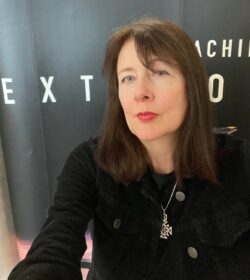
Dr Ruth Herbert, a professional pianist and music psychologist, is Project CREATE Co-investigator.
What drew you to this area of research?
As a music psychologist and professional pianist, I’m interested in how and why people engage with the arts in everyday life and how creative engagement shapes ways of being in and experiencing the world.
For over two decades, I’ve been researching psychological qualities of involving artistic experiences – what it feels like to play music, write a story, paint a picture, create a collage or mix art forms together (as in theatre or film). My central question has been: ‘is there something special about the arts?’
That led me to compare a range of activities individuals found to be involving and immersive, from cookery, cycling, looking at a beautiful view to chopping wood or building a wall! There are certainly commonalities. Absorption through multisensory engagement is one, but also distinct differences, which Project CREATE is helping to highlight.
What has surprised you most about the CREATE research?
There have been – and continue to be – many surprises! I’ll share two that really stood out to me. It was remarkable how much engaging in different art activities served to slow down the thinking, critical mind and allowed participants to ‘just be’ in the present.
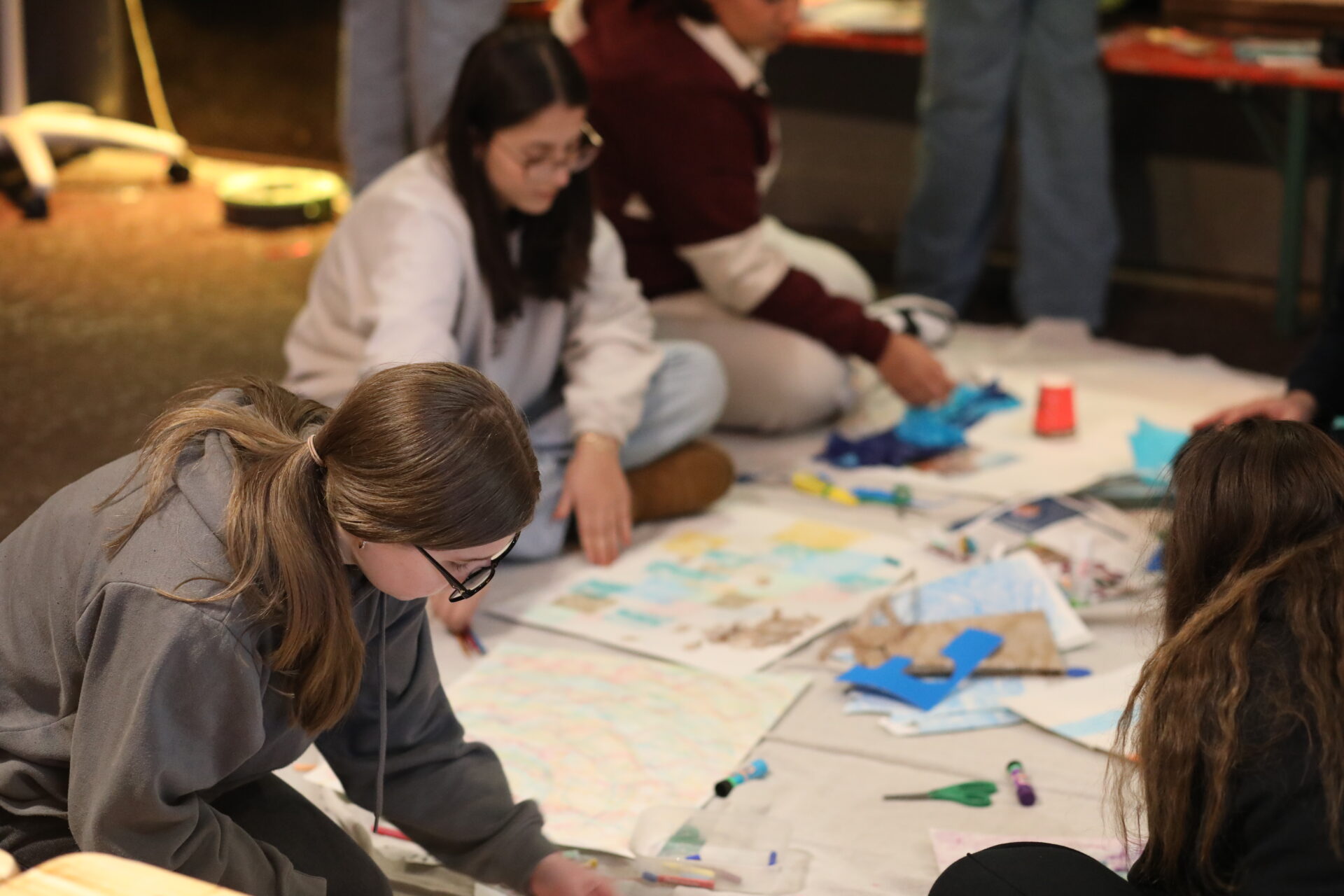
I recall a particularly striking example of this during our 4th ‘living lab’ weekend. Initially, young people filled out a couple of self-report measures commonly used in the assessment of arts programmes. The completion time was very quick. Later, they responded to selected items by engaging in a collage activity (I took part in this too, as did most of the researchers present).
The whole process was much richer and more relaxed. There was time to get immersed in detail, step back and measure the ‘temperature’ of the response – a much ‘bigger picture’ and holistic take on individual questionnaire items.
Arts researchers are used to the idea of ‘data’ as including interview transcripts, art products, etc., whereas young people associated ‘data’ with numbers and statistics
I’ve also been really struck by different ways in which young people, researchers in the social and medical sciences, and arts researchers understand key terms used in youth mental-health research. This is something that was tackled early on in Project CREATE. We needed to be aware of different perspectives to be able to talk to each other, minimising confusion to shape the stages of the project together.
For example, arts researchers are used to the idea of ‘data’ as including interview transcripts, art products, etc., whereas young people associated ‘data’ with numbers and statistics. Another ‘slippery’ term was the word agency. It’s a concept recognised across research disciplines (though in different ways), but young people tended not to use it.

"The perspectives of young people and arts practitioners have tended to be underrepresented in a large number of studies."
From your perspective, what is the most important aspect of the Project CREATE research?
For me, the most important aspect is the integration of young people, researcher and artist perspectives. It’s really providing a different, fresh and nuanced vantage point on the role of the arts in therapeutic contexts.
Why do you think arts-based approaches are valuable in youth mental health research?
One reason arts-based approaches are so valuable is that activities draw on leisure-time pursuits, such as music, video-making and dance that may be familiar and already part of young people’s daily lives.
Arts-based approaches help avoid the traditional split between mind and body. They are about doing and active involvement, placing the self in context, interacting with materials and other people, in a non-clinical, non-medical setting.
Young people are able to simply ‘be’, within a protected space that’s separate from the pressures and expectations of their daily lives. The arts afford enriched, multimodal environments, a way to access felt states and experiences beyond words.